
2025 in review, and a small 2026 preview
The almost all-consuming project this year was the production of Movements I. It took up most of the space in both the calendar and in the headspace, as well as acted as the rhythm-stick for the year.
In mid-February we started recording. Heðin Ziska Davidsen, who produced the album, came to Denmark and we lived and worked together for three intense weeks. By the time he arrived, we’d already been working on the music for quite a while. I had made a series of demos, building the overall timeline of the album and recording parts with the band to get closer to how the final production might sound. And Heðin had been working on these pre-productions. I’d also had several sessions with Ulrik focused specifically on the drum parts, which was hugely helpful when shaping the material.

So we started with a solid batch of demos and a fairly clear structure. The A-side was close to finished. The B-side still had some gaps. I hadn’t had time to complete everything before recording started. As it turned out, that was a good thing: some of my favourite moments on the album came out of that unfinished space. (Emberlin being the most clear example)
Heðin arrived with a healthy amount of equipment and we set up shop in my home studio and got to work. We’d start in the morning and work most of the day, trying (with varying success) to maintain a steady rhythm with breaks, meals, and some sense of structure.
After dinner, Heðin would usually keep going for hours into the night refining details, editing, listening again, making small decisions that slowly accumulated into the music that’s on the album. I’m more of an early sleeper and an early riser, so my contribution to the night shift was mostly psychological. Instead, I’d get up very early and work on parts that still needed attention as the album took shape: arranging, last-minute composing, and small changes that suddenly felt important. Then I’d rejoin the sessions once the day properly started. Coffee for Heðin, tea for me and GO!
Those weeks were extremely productive in a slightly exhausting way. Most of the album was recorded there, with a few additional sessions taking place on the Faroe Islands shortly after. It was one of those periods where days blur together and the only clear markers are meals, coffee or tea breaks, occasional sleep, and the moments when something finally clicks musically and the production moves to another level. Really good memories from that time.
Through spring, the album slowly came together. Editing, listening, revising, listening again. In late April I travelled to the Faroe Islands for the final mixing. By that point, the album had really started to have a clear direction, which is always a relief. There’s usually a moment where you realise you’re no longer forcing things in a particular direction, but mostly stepping aside and letting decisions happen more intuitively and with less internal judgement.
Over the summer, the singles were released one by one. Although Movements I is conceived as a long-form, continuous album, where each part grows out of the previous one and gains meaning from its placement, we decided to extract four singles and cut them into bite-sized pieces. Each release felt like sending a small fragment of the project out into the world, while the larger whole was still quietly forming behind the scenes.
On August 1st we travelled to Belgium to play at the beautiful Dranouter Festival. That was a real highlight. The last time we played there was nineteen years ago, so it felt like a genuine return rather than just another gig. We also performed Taktstok (the closing track on Movements I) live for the first time ever. That’s always an exciting and slightly nerve-wracking, but also satisfying moment: finding out whether a piece that has lived “quietly” in a studio can actually carry its own weight on stage.
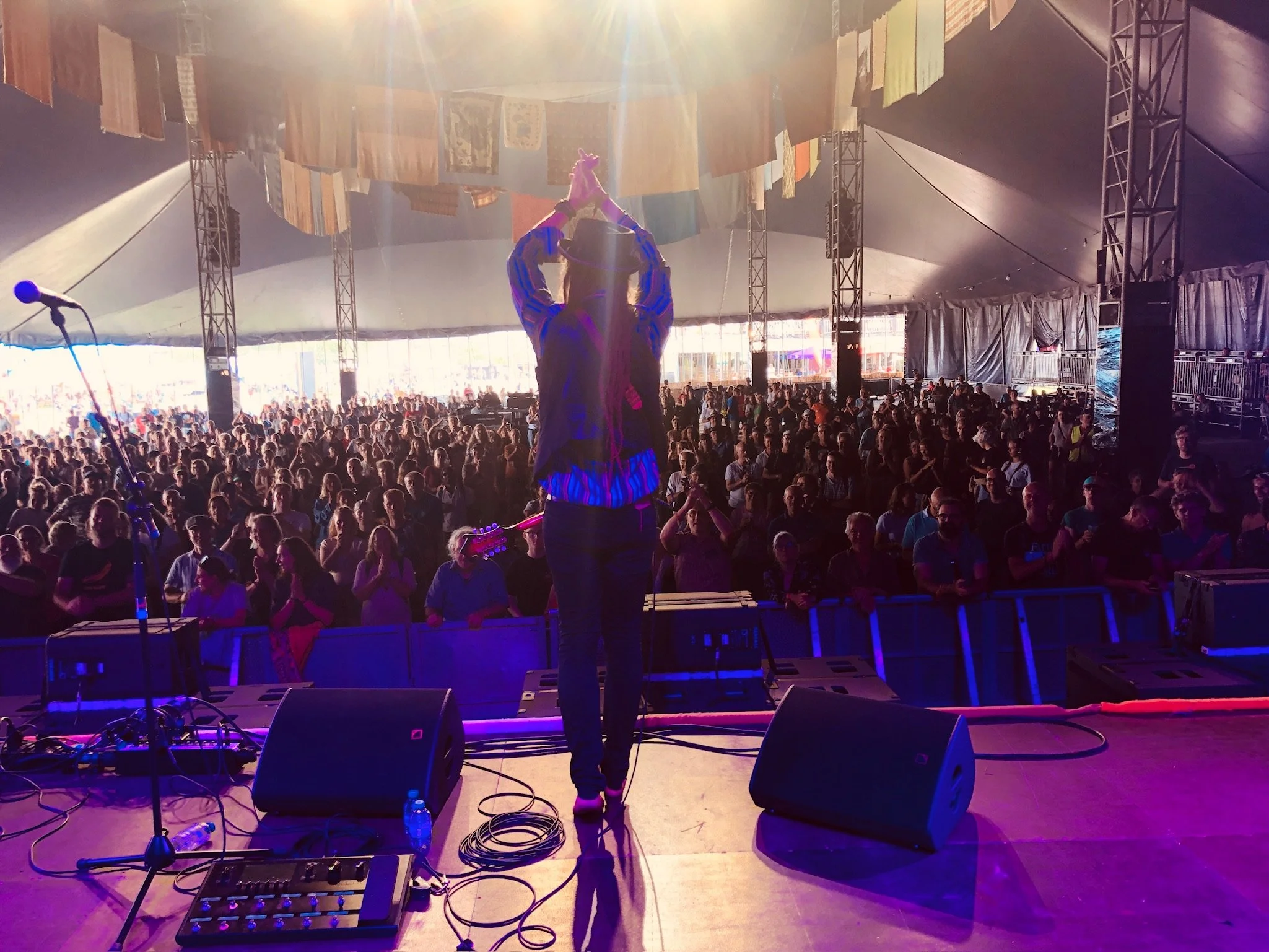
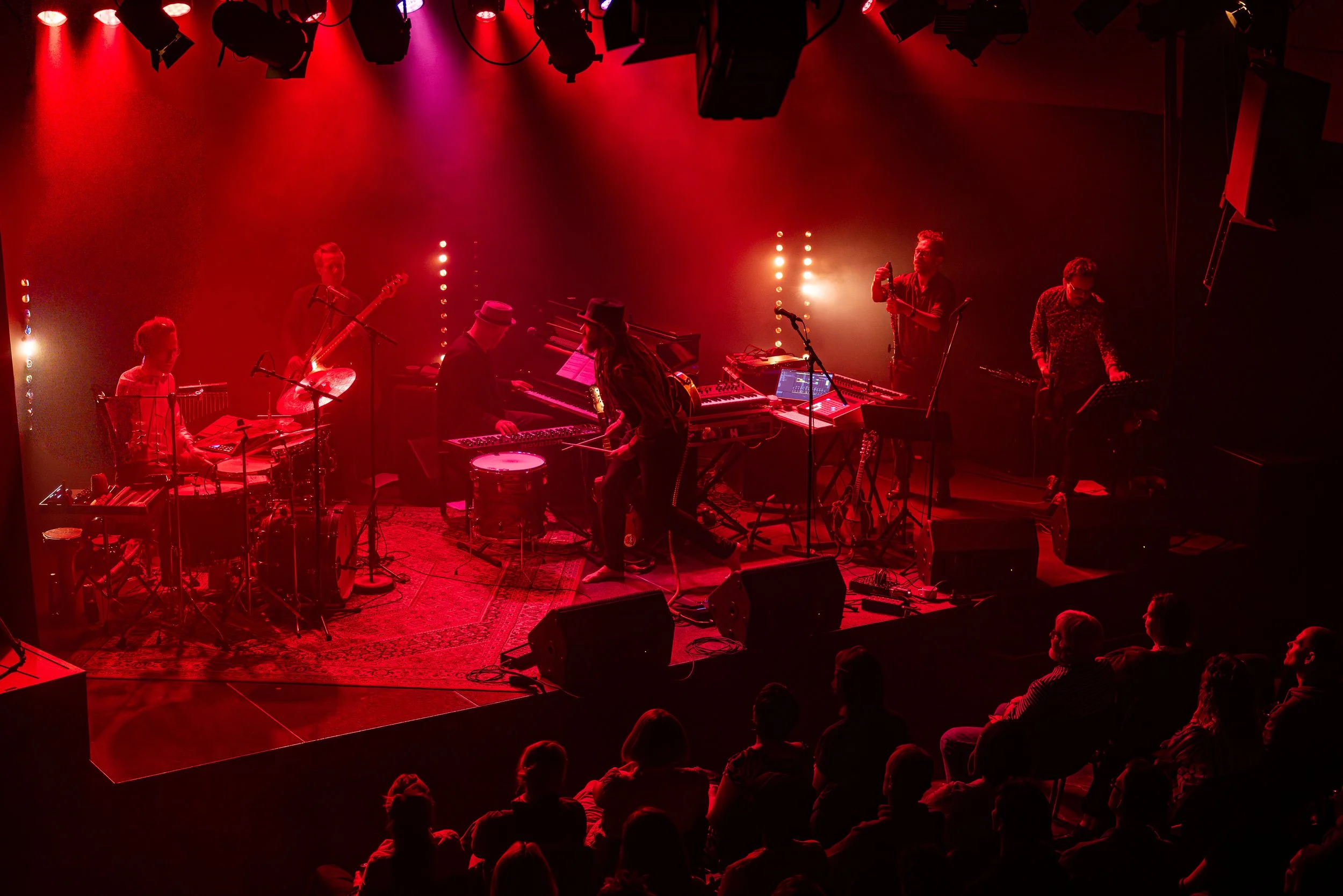
In mid-September the album was finally released. Leading up to that, we rehearsed extensively for the release tour, working on how to translate the music into what became one of our larger live productions to date. We’ve done large-scale productions before, often involving extra musicians or choirs, but this one was challenging in a different way. It took some time to settle, but once it did, it worked remarkably well. We played a series of concerts in Denmark and Germany, and it was genuinely rewarding to go deeper into the material with each show.
Right now, the focus has shifted forward. 2026 is already taking shape, with concerts in the pipeline that I’m really looking forward to. Later this spring I’ll start working more intensively on Movements II. I have a growing pile of drafts, sketches, and half-ideas that have been quietly accumulating. From March onwards I’ll begin sorting them, shaping them, making demos, and seeing what holds up, and what else might emerge.
That work will include regular sessions with Heðin in both Denmark and the Faroe Islands, as well as bringing the band together to develop the music collectively. At this point I have a fairly clear sense of the general direction the music might take, and I also know from experience that it will change significantly once we actually start working on it in earnest. I’m very much looking forward to that part.
If everything falls into place, Movements II should be ready for release in early 2027. For now, the work continues. Slowly Methodically. And with a healthy dose of uncertainty.